Year 1 Butterflies
You are here:
Mr Hancox and Mrs Slusarczyk

P.E. Days and Forest School
PE: Wednesday and Thursdays
Can children please come in wearing their P.E. kits on these days. Long hair must be tied up and any watches, earrings or other jewellery removed. Children should have shorts for P.E. sessions; for safety reasons, only children wearing shorts can be allowed to use the P.E. apparatus. Children should also wear a hoodie and jogging bottoms in case of cooler weather.
Home Learning
English: Make time to read with your child for approximately 5-10 minutes every day, as well as practising the Phonics Tricky Words attached to the bottom of this page. Our Library Day is every Tuesday, so children can also bring their library books back and exchange them for new ones then.
You don't need to record each daily reading session in your child's Reading Diary, but do make an entry at least two or three times a week; whenever they finish a book; or just to say that they enjoyed a particular story you've shared.
Maths: (20-30 minutes per week) Following the White Rose Maths scheme, we've just finished looking at adding and subtracting within 10. Can your child recognise the +, - and = symbols? Can they use objects around the house to practise adding two numbers (parts) together to make a whole? Can they draw you a part/whole model to explain their answer? Class workbooks will be coming home this week and the Home Learning booklet is attached to the bottom of this page. Can your child talk you through their learning?
Number recognition is also important in Year 1, and the children frequently struggle to recognise the tricky teen numbers between 10 and 20. I've attached some number recognition flashcards to the bottom of this page if you'd like to practise at home. The 'Out and About' cards on our maths page also have some great ideas for exploring numbers in everyday situations.
History: Our history topic this term is 'Toys Through Time', and part of the learning is the children finding out what toys their parents and grandparents played with. How are they different to the toys we play with today, and are any of the same toys still as popular now as they were with previous generations? If you have any memories or photos of old toys that previous generations enjoyed, we'd love to see them so we can compare them to the toys of today.
Picture News
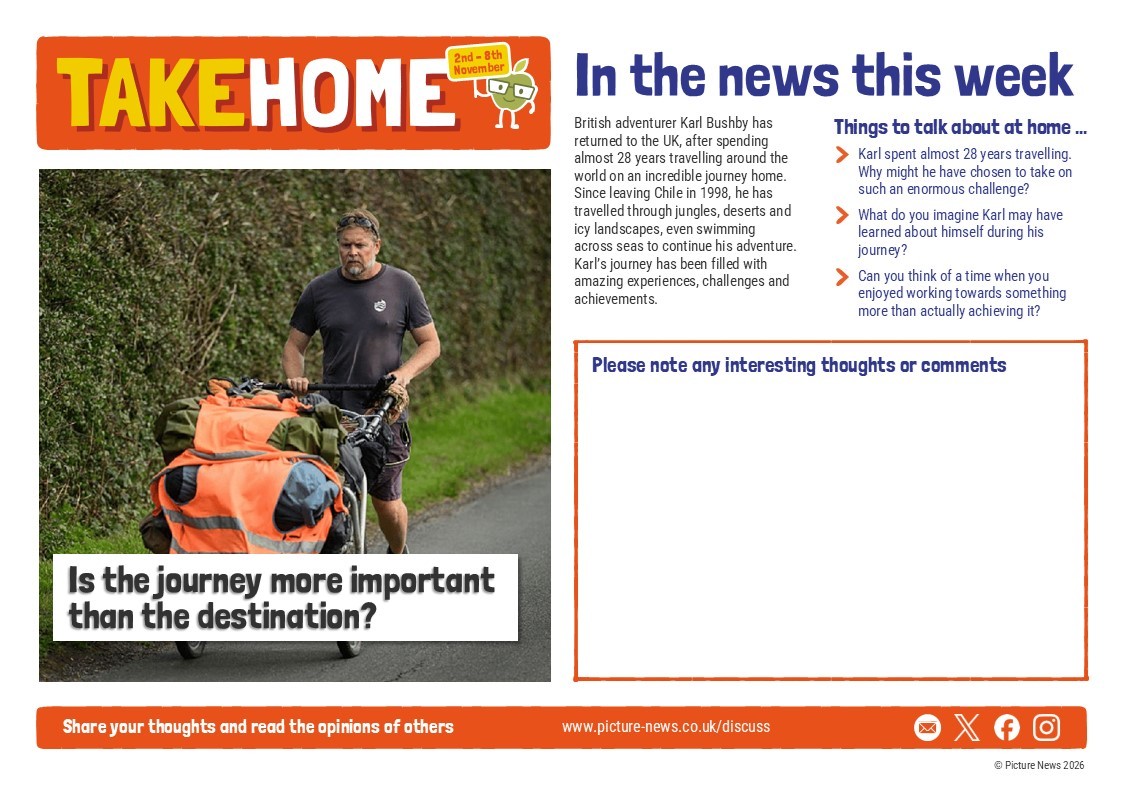
Primary Picture News is a child-friendly look at some of the events going on around the world. This week, the children heard about a 28-year journey home. Ask your child about the story using some of the conversation starters above.
Class Reader
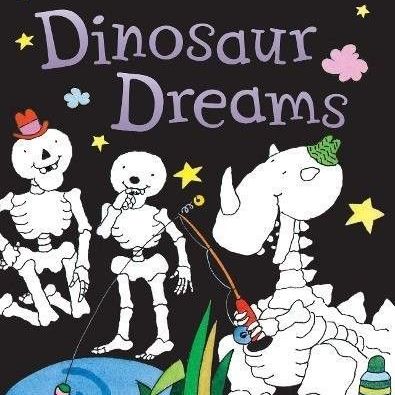 We read a range of books in our daily story time. This week, one of them was 'Funny Bones: Dinosaur Dreams' by Allan Ahlberg and Andre Amstutz.
Ask your child about the story. Can they tell you what happened and which characters they remember? Do they have a favourite part of the story that they could tell you about or draw a picture of? Who was having a dream and how did they feel? Why was the skeleton dog happy at the end of the story?
A Taste of Our Learning
Week 9 - Toy tales, awesome orienteering and whose habitats?
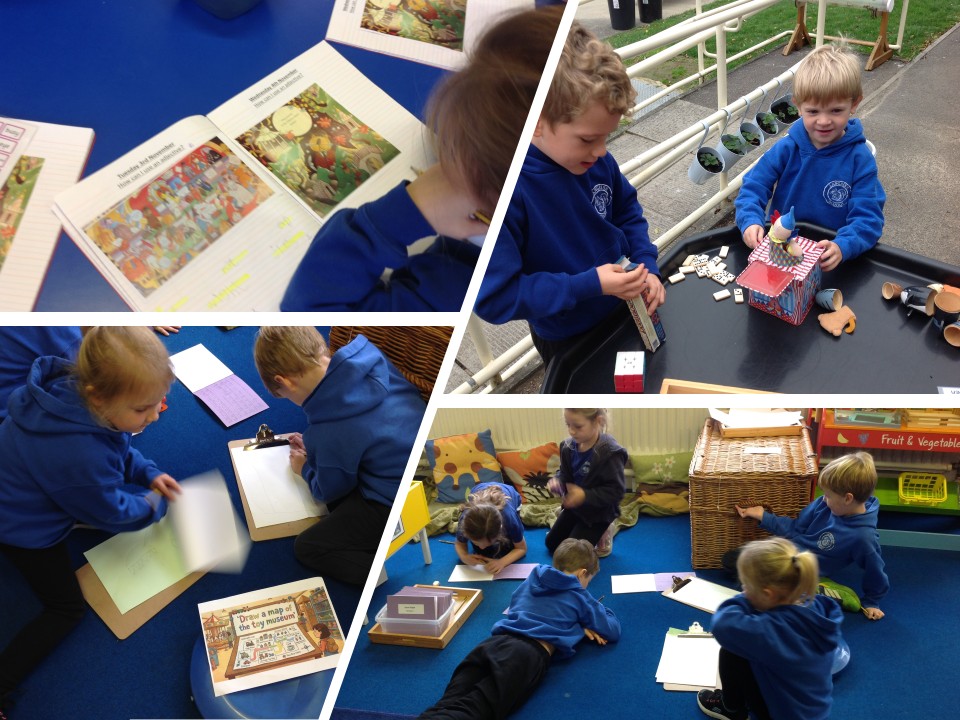 In English, we're concentrating on using adjectives (describing words) in our writing, and it's all linked to the story 'Lost on the Toy Museum' by David Lucas.
We began by hearing the story, and the children have been writing about different sections of it every day, concentrating on the use of adjectives to add descriptive detail to their sentences.
Alongside this, there have been a number of linked activities to enjoy, including talking about different toys in order to encourage the children's oracy skills, drawing a map of the toy museum and testing their Phonics skills with a special postbox task.
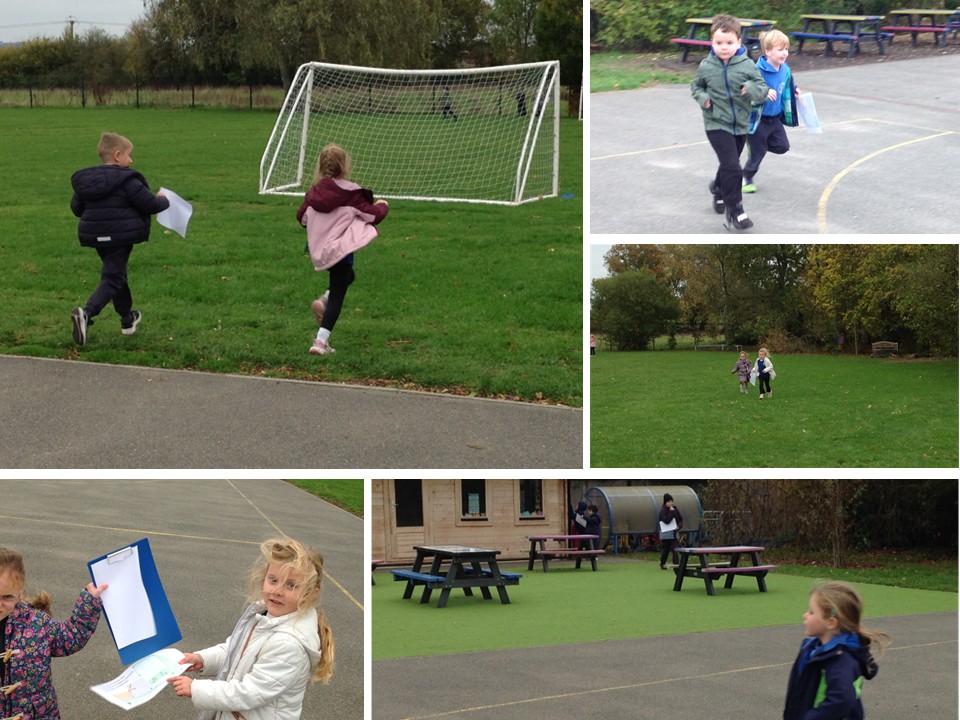 On Wednesday afternoon, Year 1 took part in a special Keystage 1 orienteering event.
The course was set up and organised by Year 6, and involved the children using a map to find different stations dotted around the playground, copse and school field, all of which contained the name of a country from somewhere around the world.
It was a wonderful way for the children to be active, practise their map-reading skills and learn some geographical facts all at the same time!
Ask your child what they enjoyed about the challenge.
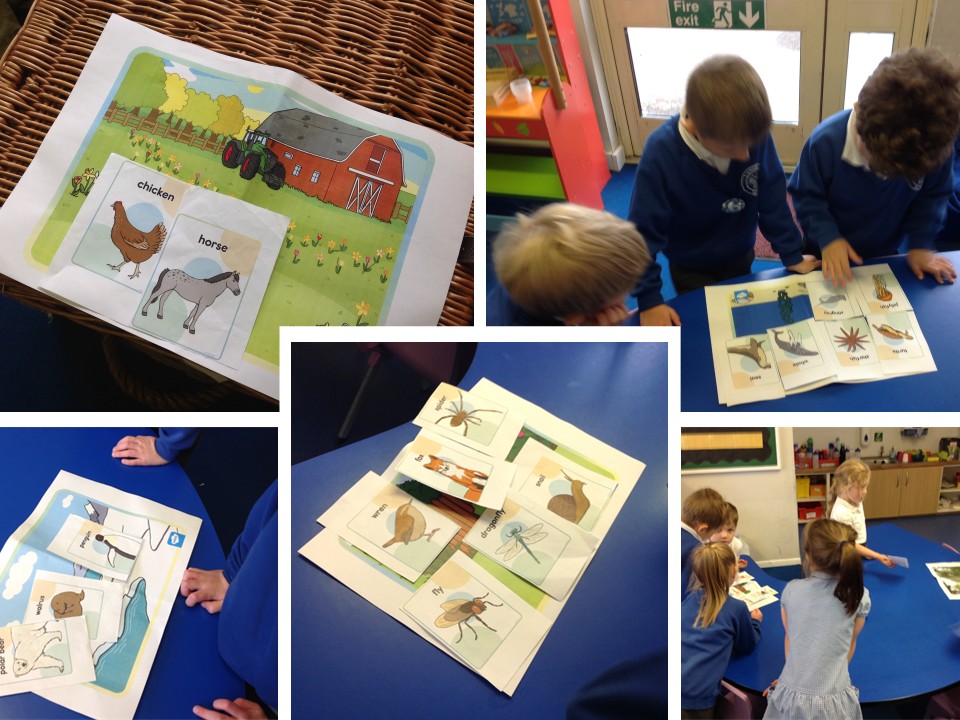
In Science, we began our 'Habitats' topic by discussing what the word 'habitat' means.
We talked about living things - both plants and animals - and defined a habitat as a place where plants and animals live. The children were each then given a picture of an animal and had to search around the classroom to find the habitat where their animal would live, choosing from the polar regions, the desert, the forest, the ocean, the rainforest, a back garden, a farm or a pond.
Which animal did your child have, and what was its habitat? How did they know?
Week 8 - Brilliant Braille, mermaid materials and confident computing
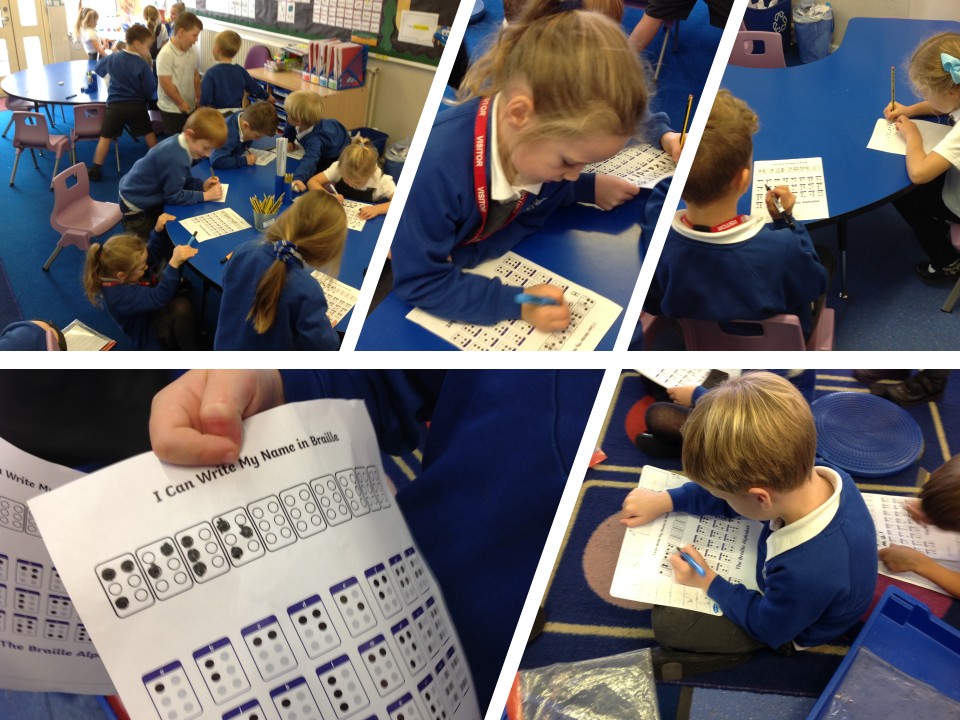
Our People Project subject for this term's 'How to Change the World' theme is Louis Braille. First, the children heard the story of Louis Braille, who became blind after an accident as a young child. He learnt about a system of writing using twelve raised dots, developed to enable French soldiers to read messages at night. He refined this into a far more efficient six dot system, which is still used to allow blind people to read nearly 200 years later. The children completed a fact sheet and even wrote their names using the Braille alphabet.
Ask your children what they remember about Louis Braille and where we might find Braille writing in our day-to-day lives.
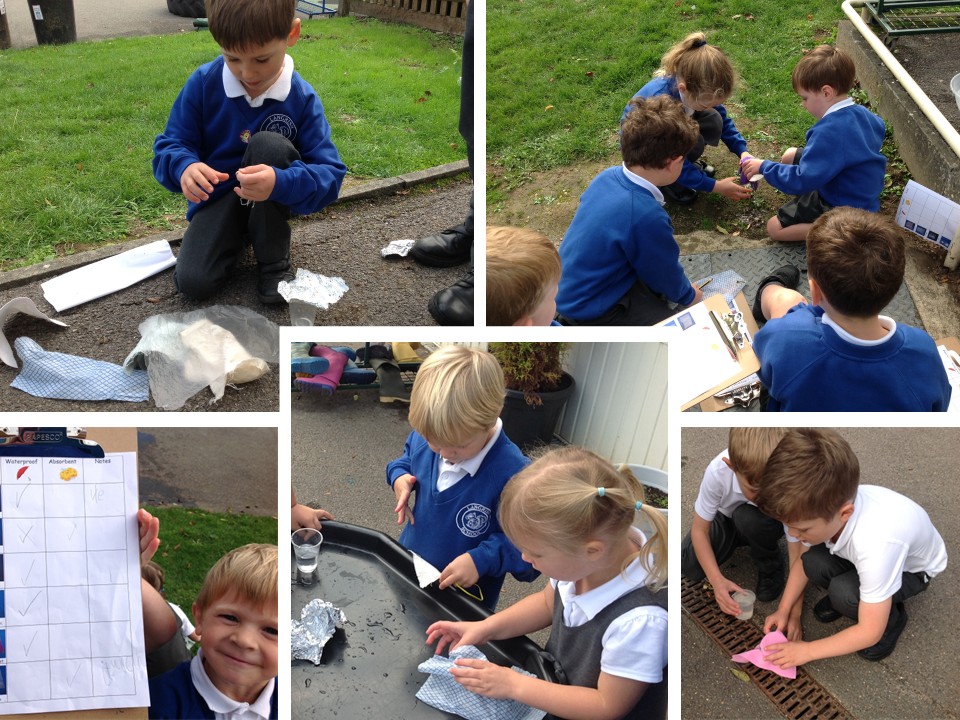
It's not every day you get a letter from a mermaid, but this week, Year 1 received a request for their help: Marissa the Mermaid had lost some of the scales from her tail, and needed some material to cover the area while her new scales regrew. The children decided which properties the material would have to possess (being waterproof, strong and flexible), and went about testing different materials to see which would be the most suitable for the job. Obviously, it had to be a fair test, so they also had to be scientific about how much water they used and how long they left the water in position.
Ask your child what conclusions they came to.
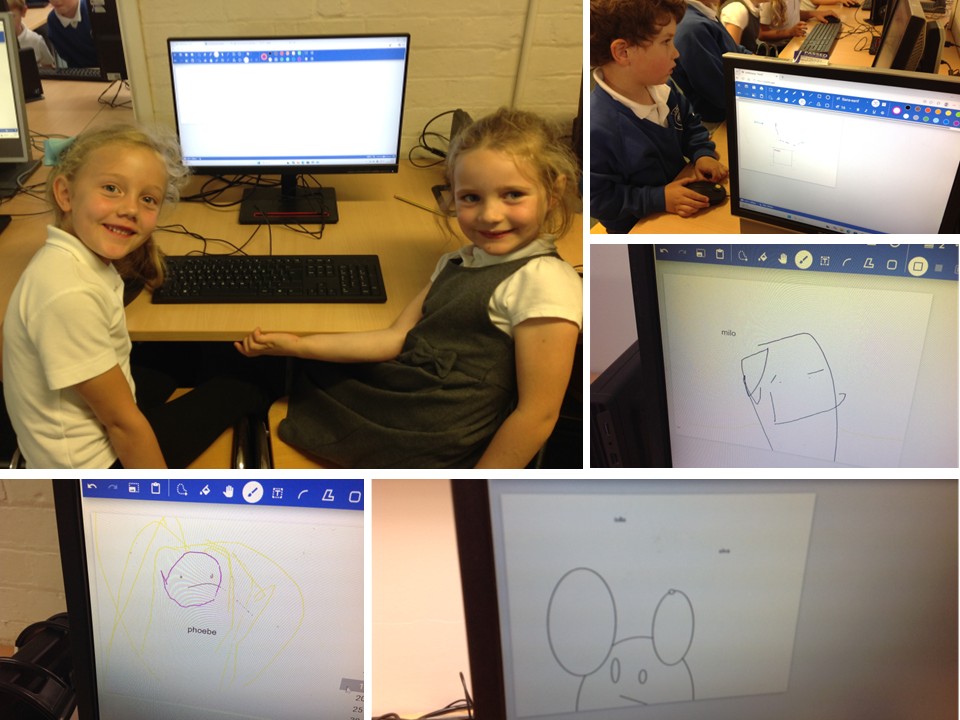 In Computing this term we've been looking at different types of technology, and for the past couple of weeks we've been honing our skills on desktop computers, focusing on using the mouse and the keyboard.
The children have been using the free PaintZ website to practise their skills. They began by using the mouse to draw a picture of themselves, then moved onto using the text function and the computer keyboard to practise typing their name.
Can your child show off their skills? Click here to try the PaintZ app at home.
Week 7 - Scientific sorting, curious cartography and porcine property developers
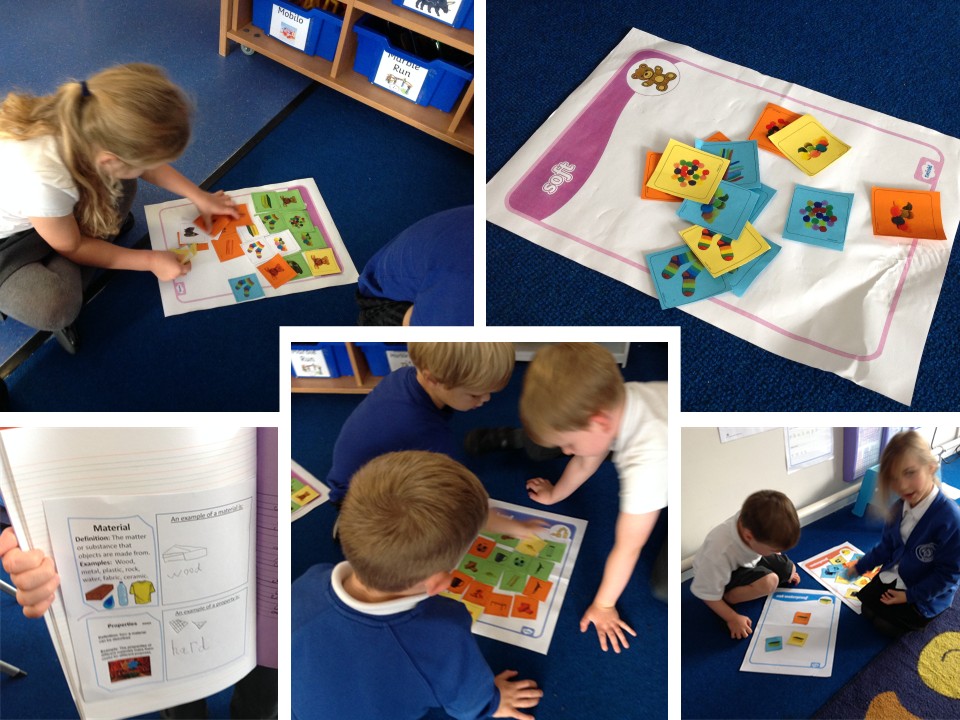 In Science, we've been learning about the properties of everyday materials.
This week, the children were creating their own glossary for the back of their Science book by drawing their own example of a material (the substance that an object is made from, such as wood or plastic) and a property (how that material can be described – for example, transparent or waterproof). They also had the job of matching a range of materials to different properties which were dotted around the room.
Can your child describe some materials and their properties?
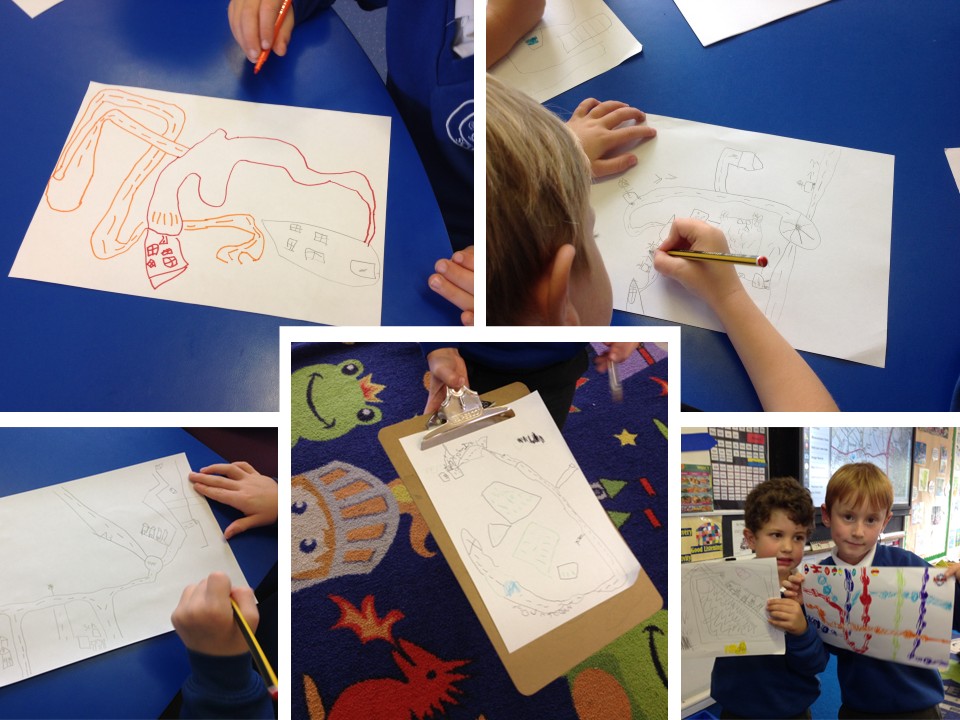
In Geography, we continued our look at the local area by exploring some maps.
Using an electronic map, we explored the roads and features of our local area. The children then set about creating their own maps, including important landmarks they often pass on their way to school. They even labelled the main roads, and included symbols to show what the different buildings were that featured on their maps.
Ask your child about their map. What landmarks did they include? Maybe they could draw a map of the area around your house.
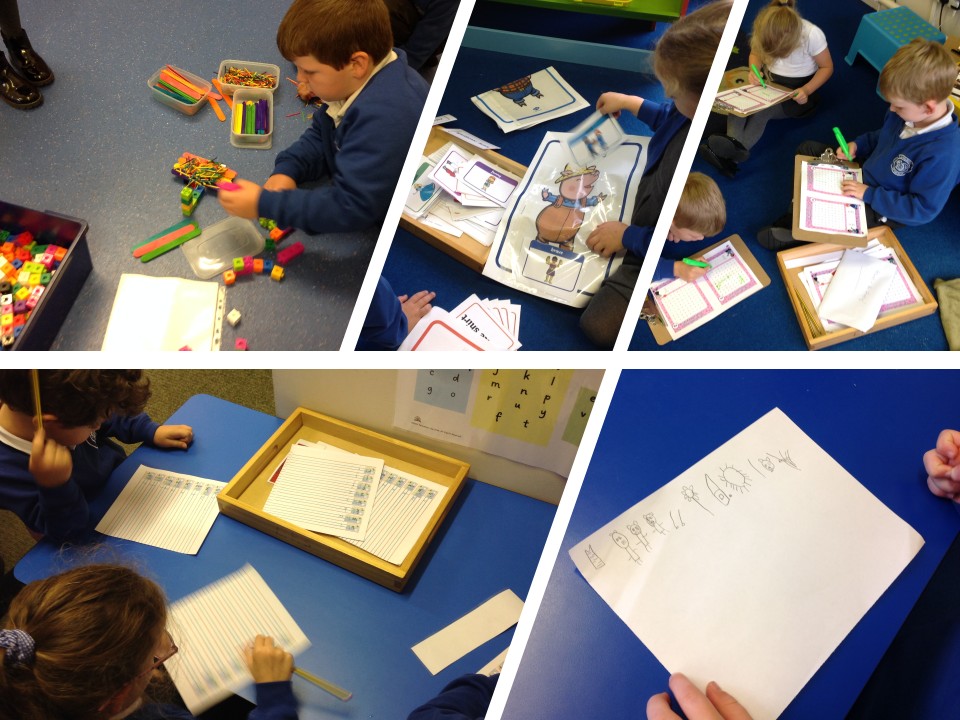 In English, we spent our first week exploring the story of the Three Little Pigs. The children began by learning a simple version of the story, drawing story maps and using actions to help embed the famous fairytale, which they'll be creating their own versions of next week. As ever, they also had a range of activities to encourage discussion and recall of the story, from deciding which adjectives suited which character to building their own houses from straw, sticks and bricks to see if they could do a better job than the eponymous engineers.
Can your child teach you the whole story, including the actions?
Week 6 - An amazing assembly, Elmery English and marvelous multiskills
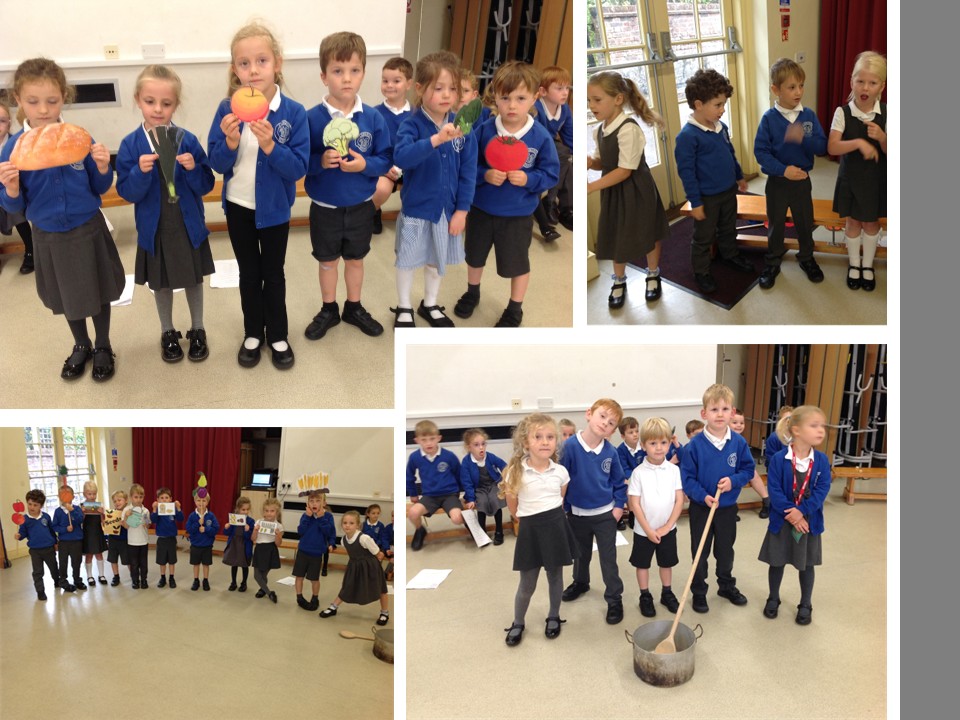
The Year 1 class did a fabulous job of presenting our Harvest Festival assembly this week.
The children talked about what harvest means, the importance of sharing with others, and performed the short play 'Stone Soup' about why the world is a better place when everybody shares.
They also recited a harvest poem and sang the song 'Little Roots' about how crops grow.
We hope you enjoyed the performance, and thank you for your kind harvest donations for the PACT Food Bank in Petersfield.
In Englis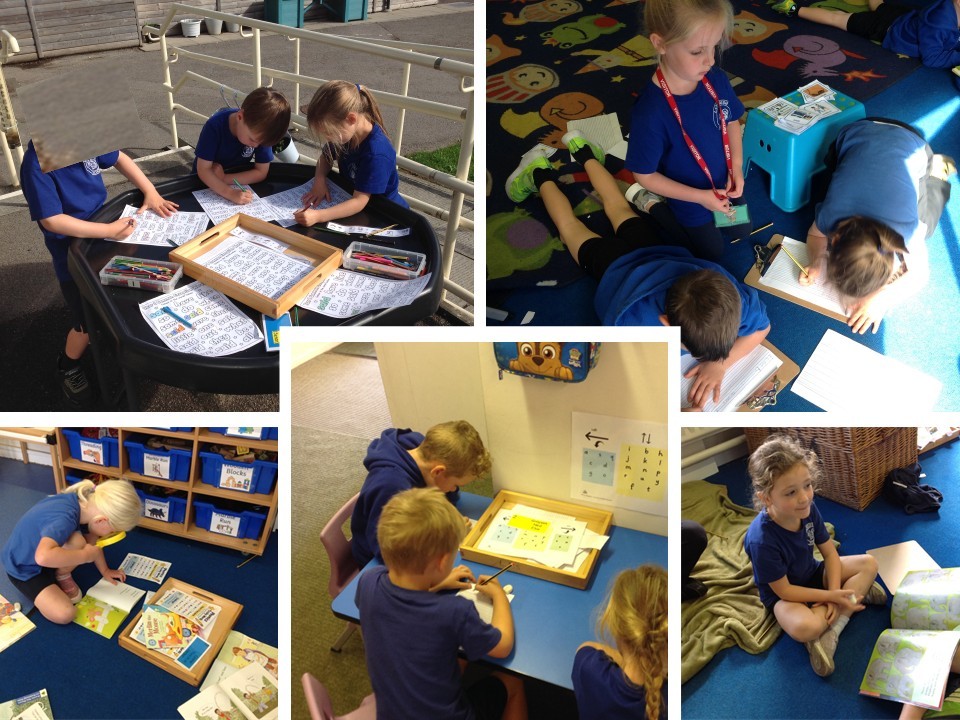 h, we've been using the book 'Elmer' by David McKee as the inspiration for our writing. As well as making up their own Elmer-style stories, the children had a number of tasks to complete across the week during English lessons, all of which embedded or revisited our learning. These included practising letter formation, looking for tricky words in reading books, finding and writing decodable phonics words and talking about the book using some of the language we've learnt this week.
Ask your child about their favourite English activities.
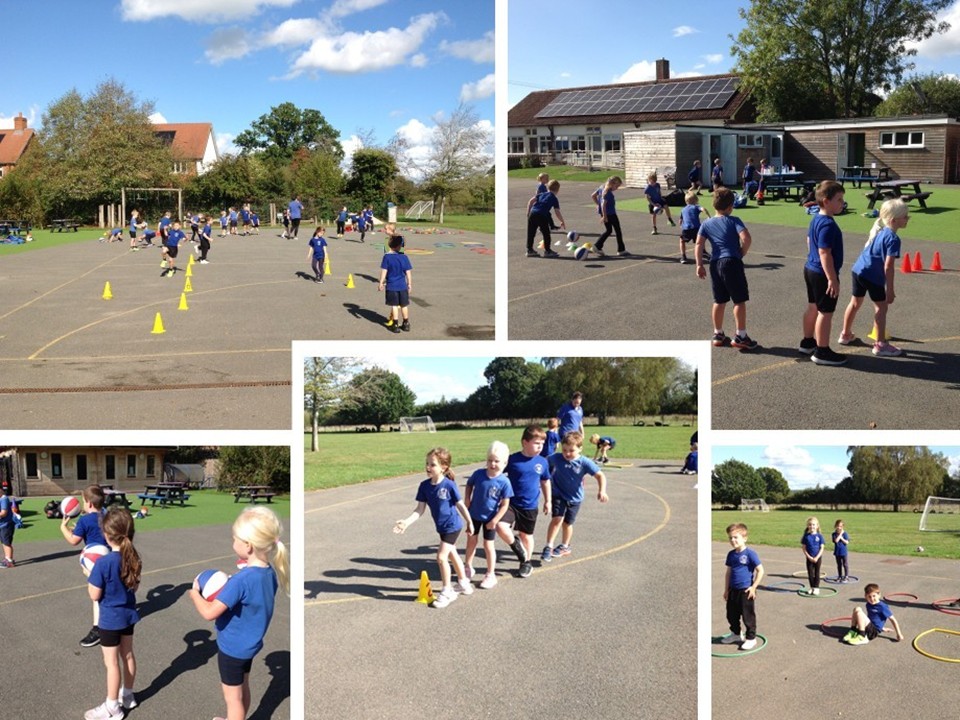 In P.E. this week, we took advantage of some unseasonably warm October weather to do some multiskills activities on the playground.
The children had to practise throwing and catching, changing direction, collecting objects, bouncing balls to each other, and hopping along lines. There were several activity stations to take part in, and the children were kept on their toes by moving round every few minutes to ensure they had a go at everything.
What was your child's favourite multiskills activity?
Week 5 - Forest school finale, hometown hierarchies and superb structures
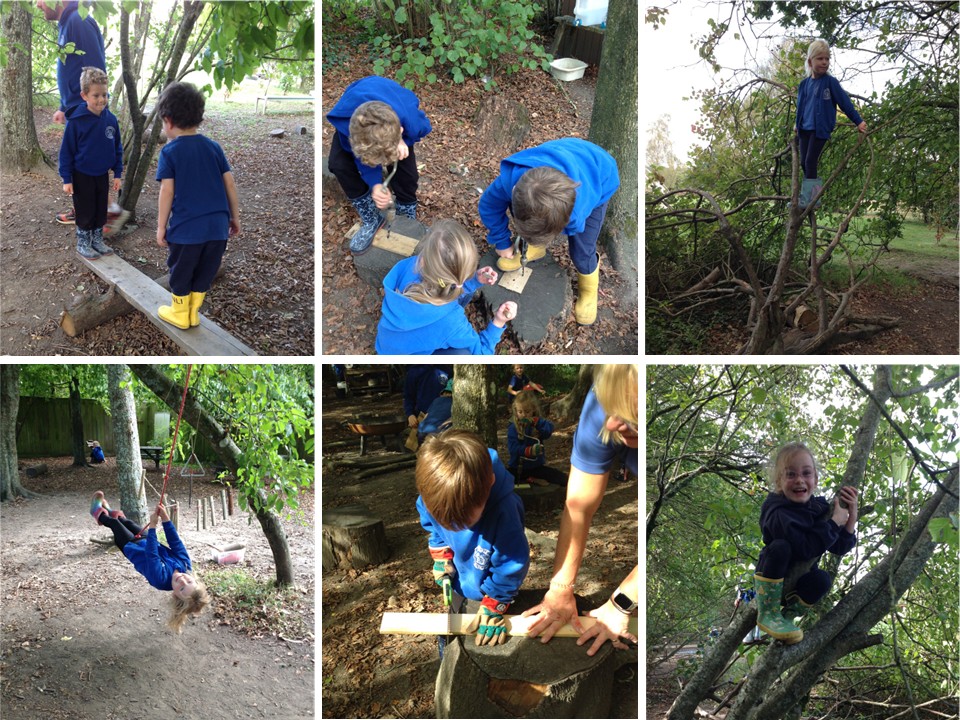
This week saw our final Forest School session of 2026. The children have had four fantastic weeks in the copse enjoying all the activities it has to offer, including bug-spotting, climbing trees, wood whittling, den building, using tools, and whipping up some "delicious" concoctions in the mud kitchen.
They've loved the opportunity to be outside exploring (or just chilling out in the hammock!) and even learnt some songs about caterpillars and gorillas which they might like to share.
Ask your child what they got up to during our Forest School sessions.
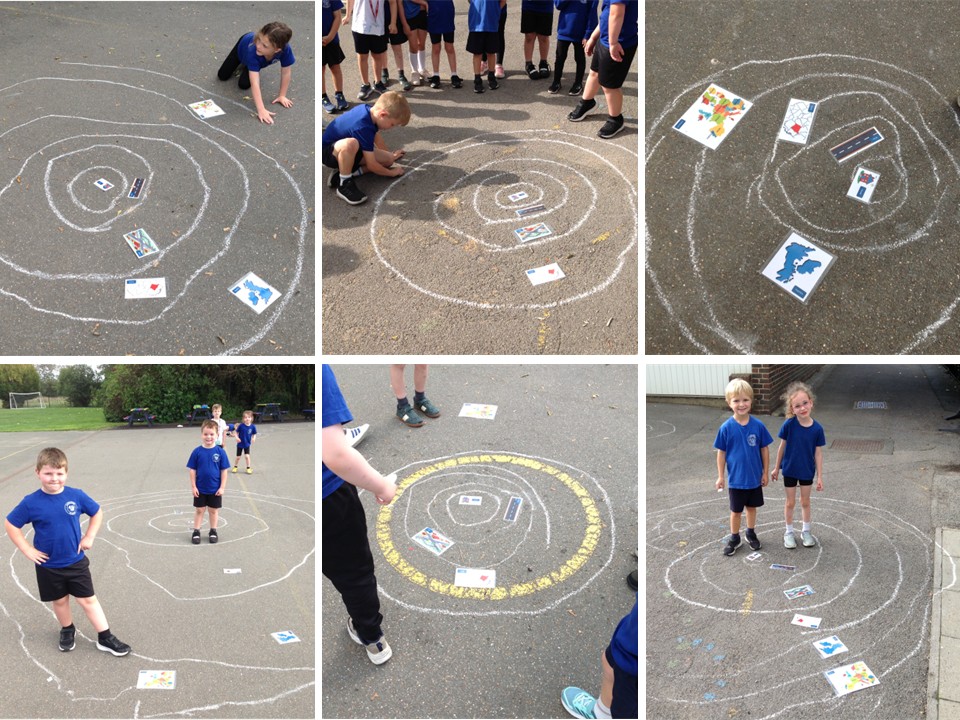
In Geography, we're looking at the geography of where we live, so we began by using Google Earth to look at the whole planet, before zooming in on Petersfield. As we got closer and closer to home, we were able to talk about continents, countries, counties, towns, streets and finally houses. We even managed to use Streetview to see exactly where some of the children lived, before zooming back out to examine Petersfield's position within Hampshire, England, the UK, Europe and, finally, on planet Earth. Using chalk, the children then created nested hierarchies to illustrate the relative sizes of these geographical areas on the playground.
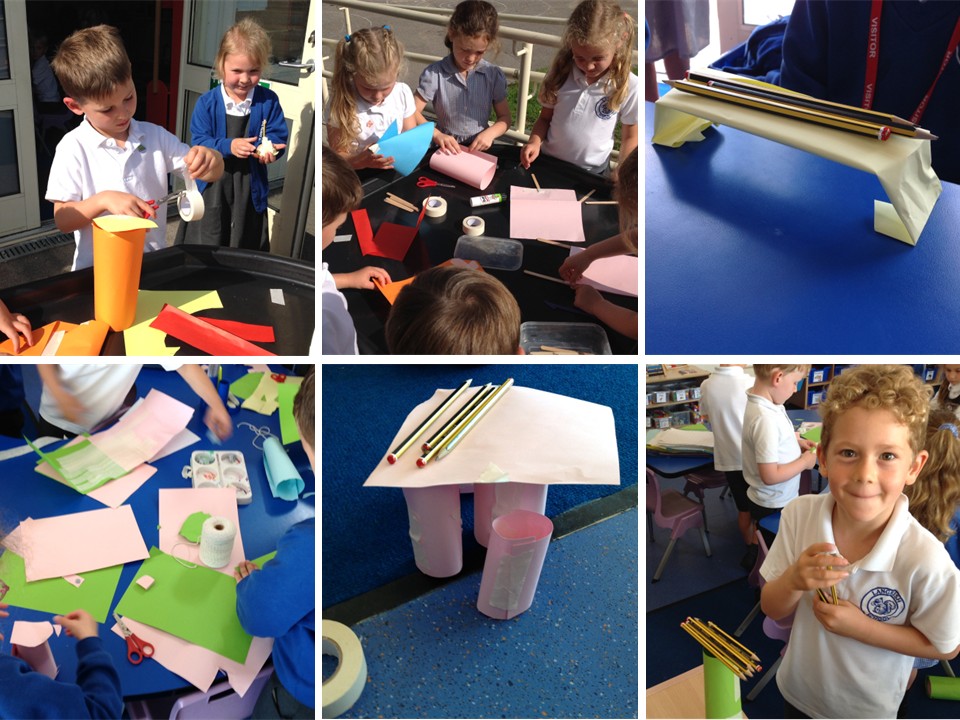
In Design & Technology, we were experimenting with different structures. Having examined playground equipment the week before and noted which shapes made the strongest structures, the children were then challenged to use pieces of paper to create shapes that would stand up by themselves and be strong enough to hold the weight of a pencil. They came up with lots of different ways of doing it, and were further challenged to see how many pencils their structures could support.
Ask your child which shapes they found were the best ones for the task. How many pencils did their structure support?
Week 4, Geographical jargon, marvellous materials and testing, testing
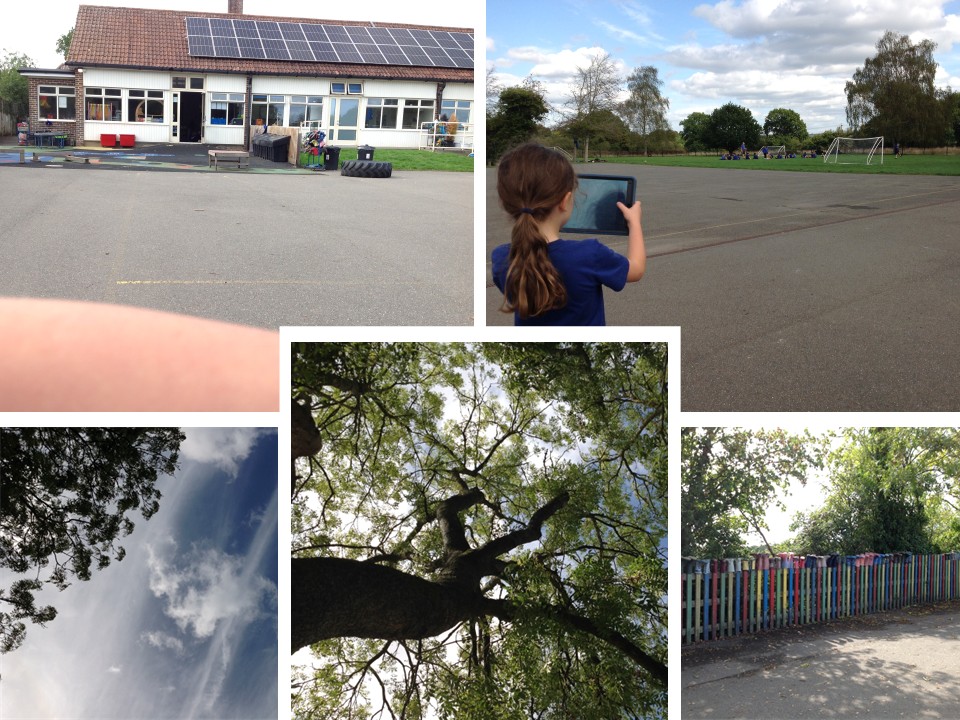
Our Geography unit this term is all about our local area. We began by learning that, at its heart, Geography is the study of people and places. We then went on to explore the difference between 'human geography' (geographical features that are built by humans, such as towns, bridges and dams), and 'physical geography' (natural features such as hills, forests, rivers and even the weather).
The children then took the iPads out to photograph some examples of both human and physical geography. Can they tell you which is which from their photos here?
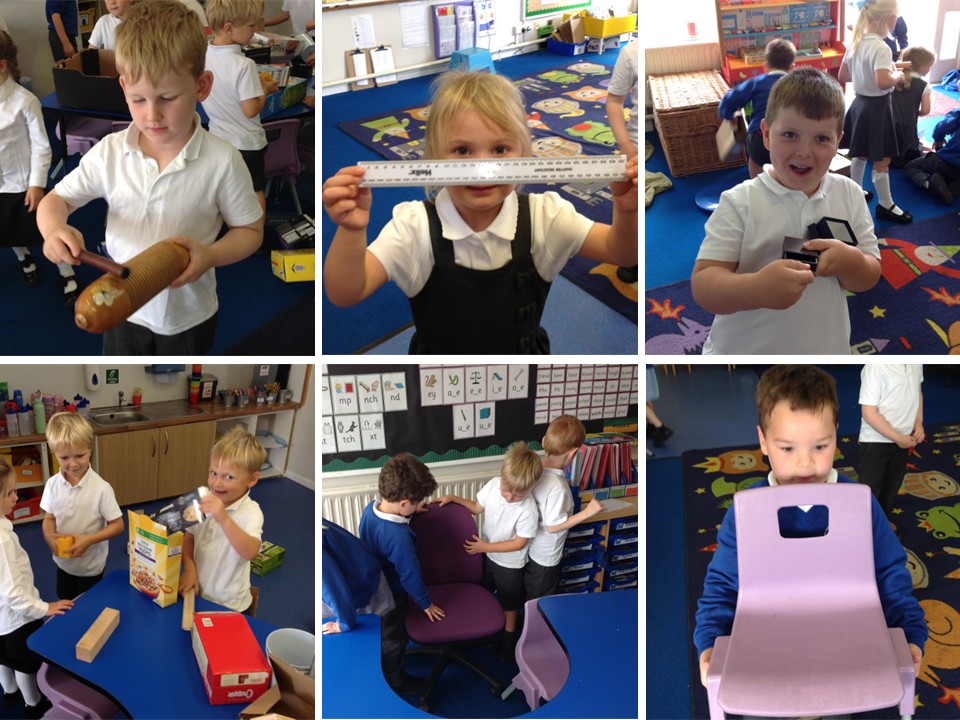
Our Science topic this term involves learning about 'Everyday Materials'. The children explored a wide range of objects that had been placed around the room, all made from different materials with different properties. The children were easily able to identify and sort the materials - including wood, plastic, metal, fabric, rock and paper - and soon got used to describing them using scientific terminology such as 'hard', 'soft', 'flexible', 'transparent', 'waterproof', 'absorbent' and 'stretchy'.
Which common everyday materials can you see around you? Can your child identify the material and describe some of its properties?
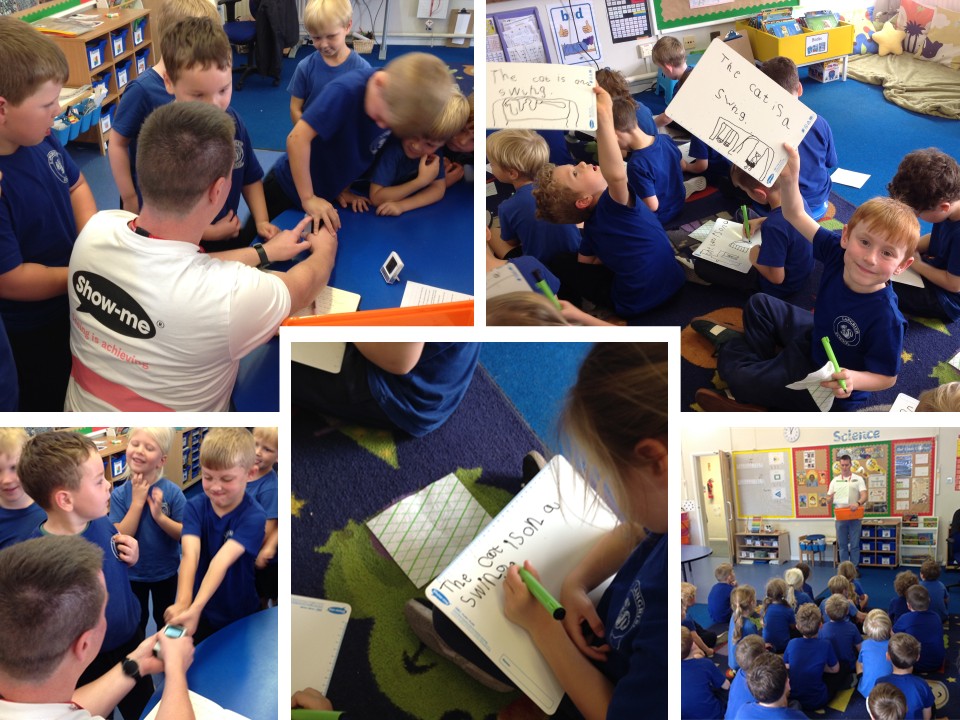 We were lucky enough to be involved in a real-life Design & Technology situation this week, as education company Show Me came in to do some product research.
The children used a new range of whiteboard pens, giving their invaluable opinion on what they liked and didn't like about them. They then suggested some (occasionally very blue-sky!) improvements, before doing a scientific strength test to see what kind of forces the products might have to withstand in the hands of a six-year-old.
Can your child tell you what they thought of the new pens?
Week 3 - Christmas crackers, serious celebrating and reading the rules
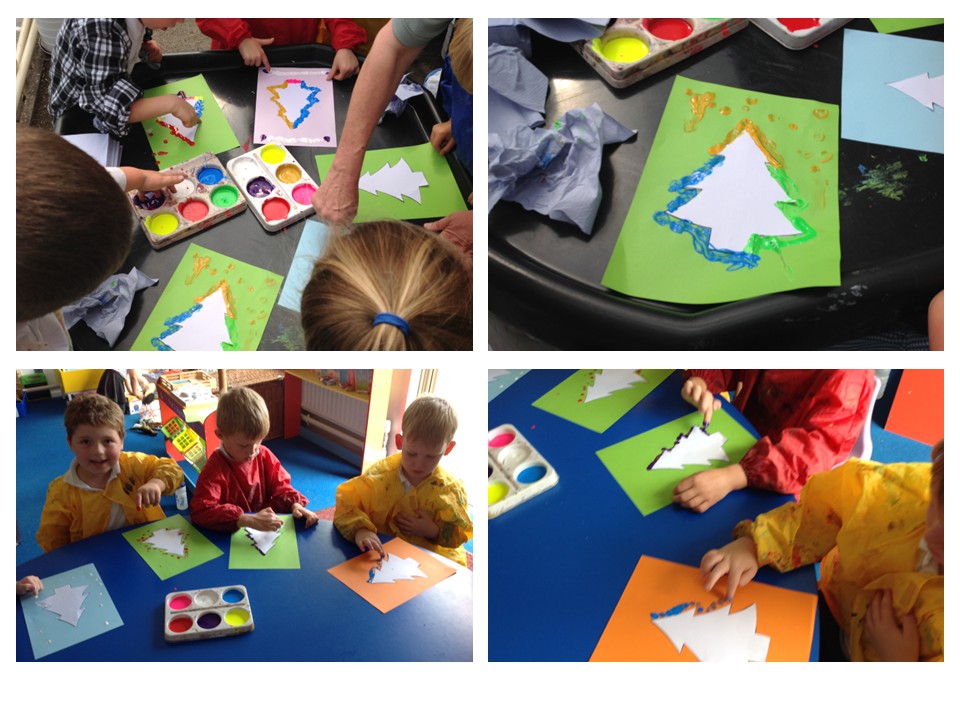
No, that wasn't a mistake in the heading! Despite it still being September, we've been fabulously festive in Year 1 this week by creating some eye-catching Christmas cards. With a backdrop of Christmas music to get us in the festive mood, the children finger-painted around stencils to create colourful relief images of Christmas trees.
The children's Christmas cards will be coming home today, giving you plenty of time to order cards, tags and other goodies featuring your child's design in time for Christmas. Click here for more details from the Cauliflower Cards website.
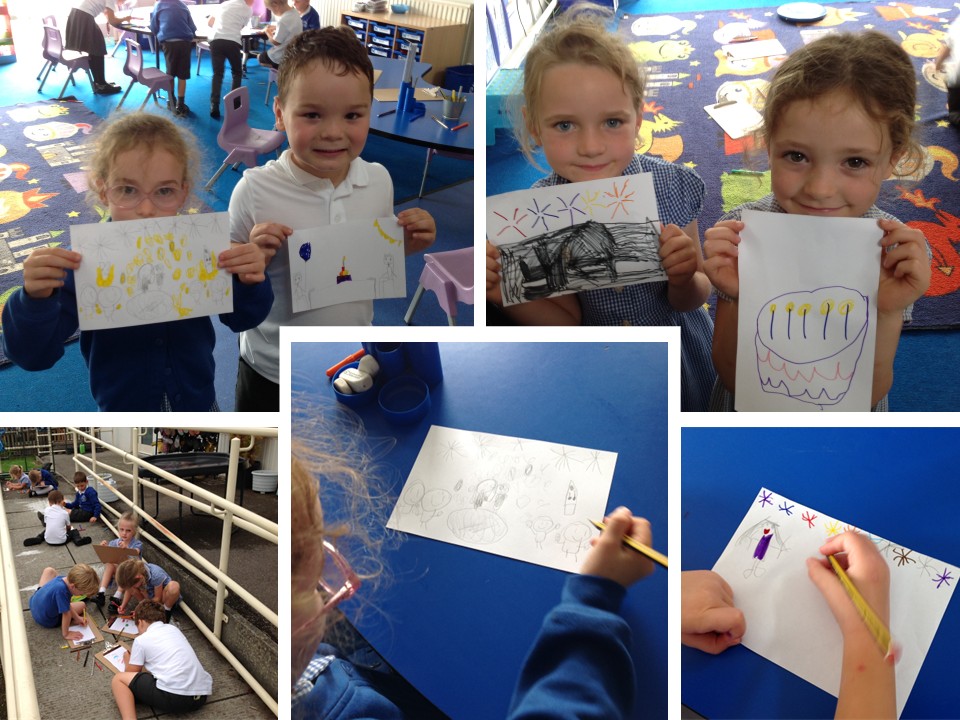
In World Faith and Philosophy, we started our look at the Harvest Festival by discussing celebrations in general.
The children talked about things we celebrate and created a long list, including everything from birthdays, Christmas and bonfire night, to Halloween, scoring a goal and moving up a swimming group.
They then drew pictures to illustrate things they might celebrate and how they like to celebrate them - many of which involved cake!
Ask your child about their favourite celebrations.
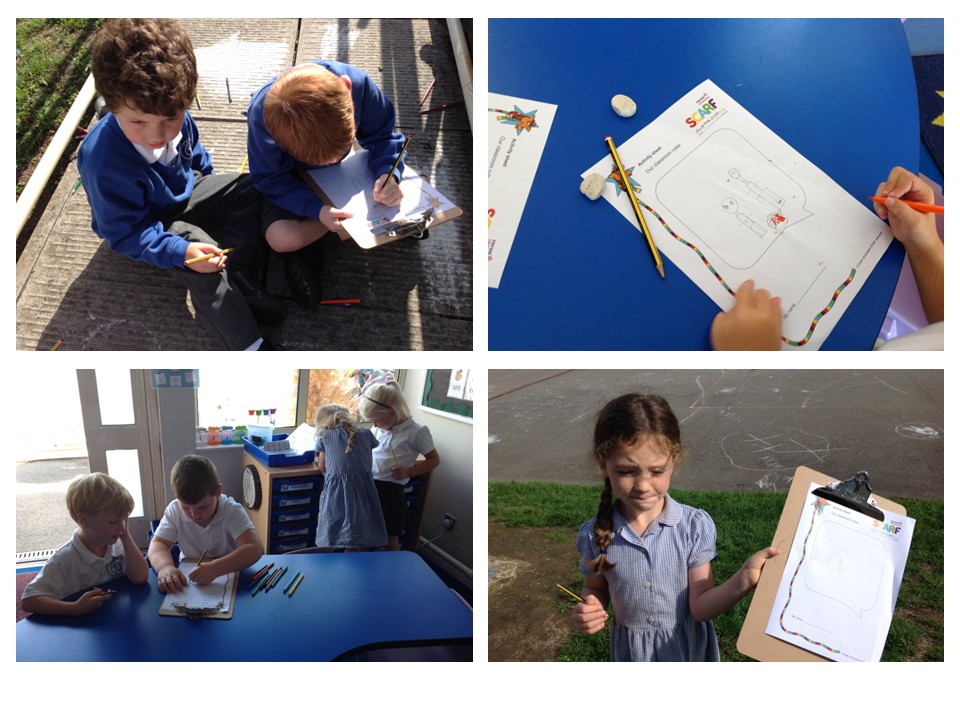
Our PSHE topic this week was all about making and respecting rules.
We began with a class discussion about rules, talking about many of the rules we have at school, such as not running in the corridors and walking through the fire circle in Forest School. We then moved on to why we have these rules, which the children were able to recognise were there to keep them safe rather than just spoil their fun.
They also came up with their own ideas for some extra school rules we might want to adopt!
Week 2 - Fabulous forest school, cool counting and tracking down technology
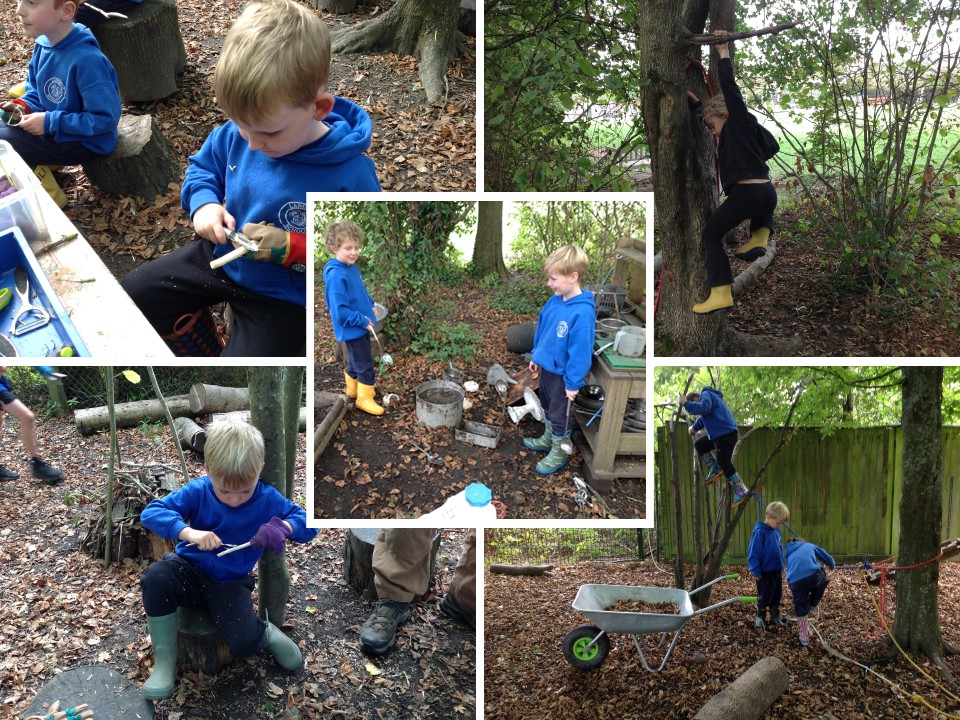 The children had their first Forest School session of the year this week, and loved the opportunity to get their hands (and everything else!) dirty.
Alongside climbing trees, building dens and cooking up a storm in the mud kitchen, the children also whittled sticks and listened out for the different sounds they could hear in the copse and coming from the surrounding fields.
Ask your child what sounds they could hear and what their favourite Forest School activities were this week.
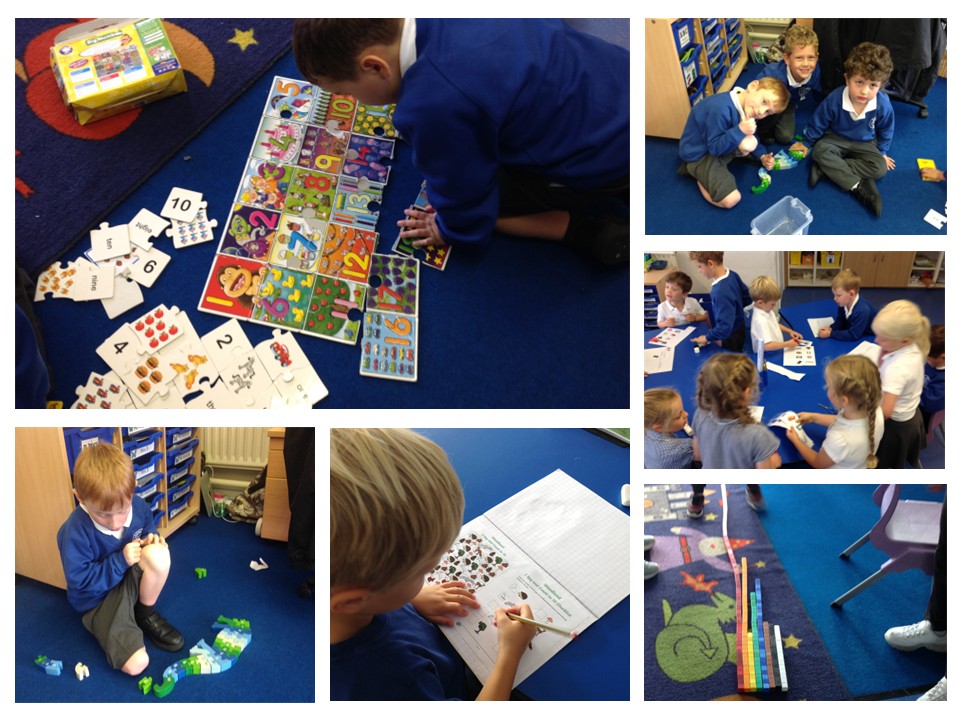
In Maths, we've been working on number and place value by sorting and counting groups of objects. We talked about the different ways we could sort objects (by shape or colour for instance) and the children then had a number of challenges to complete using different objects around the classroom.
They've also been honing their number skills in other ways, from jigsaws and dot-to-dot puzzles to matching activities and cut-and-stick games.
Ask your child about their favourite maths activities this week?
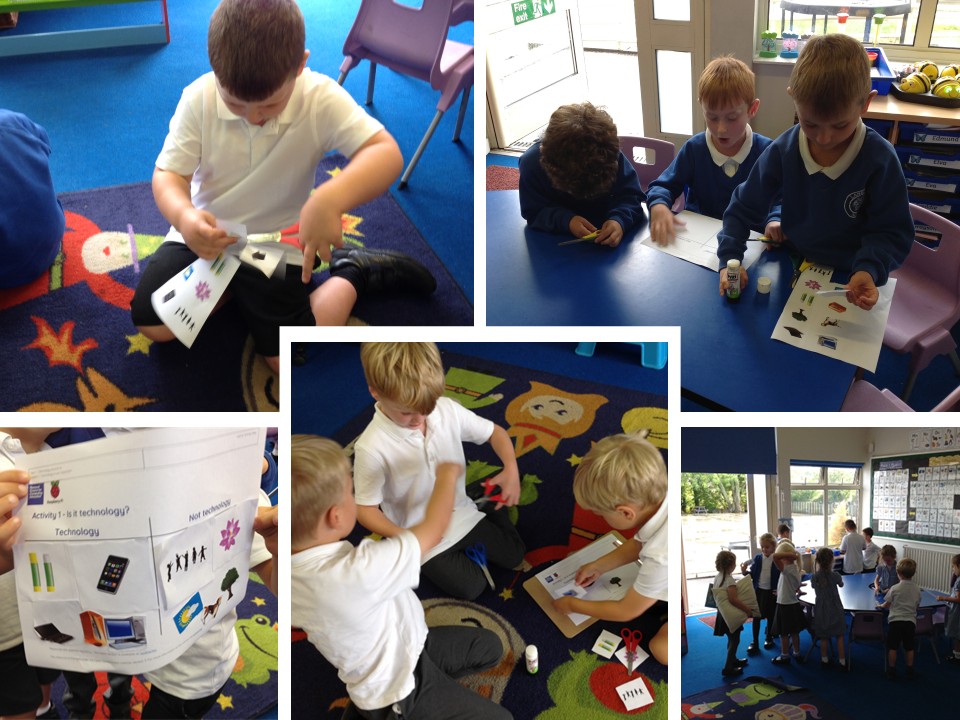 Our Computing this term is all about technology inside and outside the classroom.
We began by talking about what 'Technology' means, defining it as "Something made by people to help us".
Next, the children went on a technology hunt around the classroom, finding both electronic and non-electronic examples of technology, which included everything from computers to pencil sharpeners.
What examples of technology can your child find around the house?
Week 1 - Welcome Back!
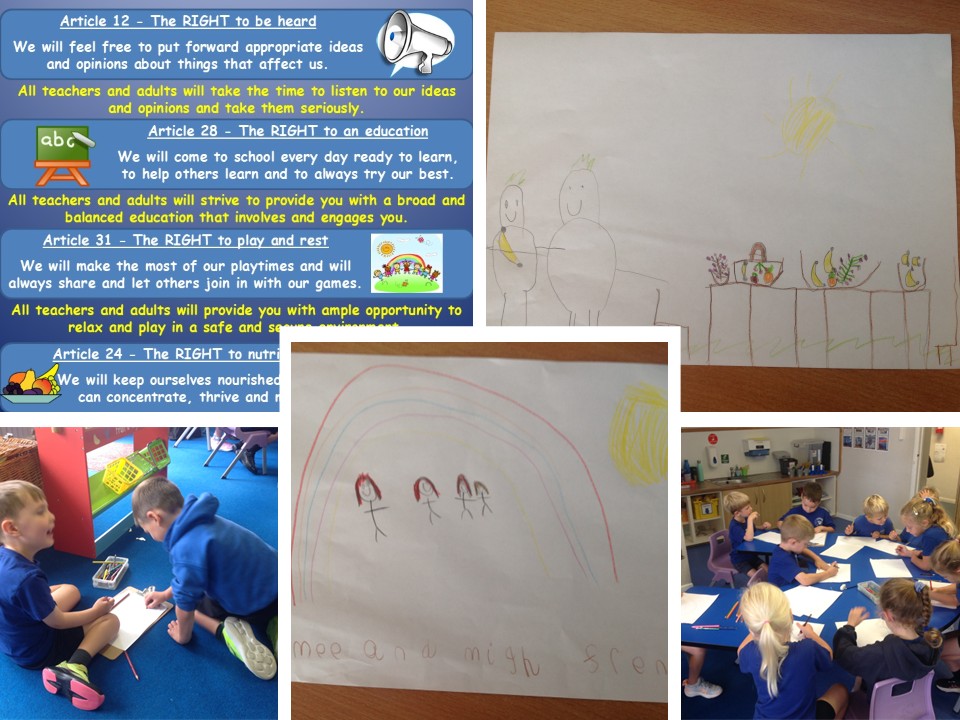
We've had a busy first few days back! First, we created our Year 1 Class Charter based on the United Nations Convention on the Rights of the Child (UNCRC). After going through the Articles that were most appropriate for Year 1, the children chose the Rights they felt were most important to them and included them in our Class Charter. These included the Right to be heard (Article 12), the Right to an education (Article 28), the Right to play and rest (Article 31), and the Right to nutritious food and clean water (Article 24).
Which Rights did your child choose to draw a picture to illustrate?
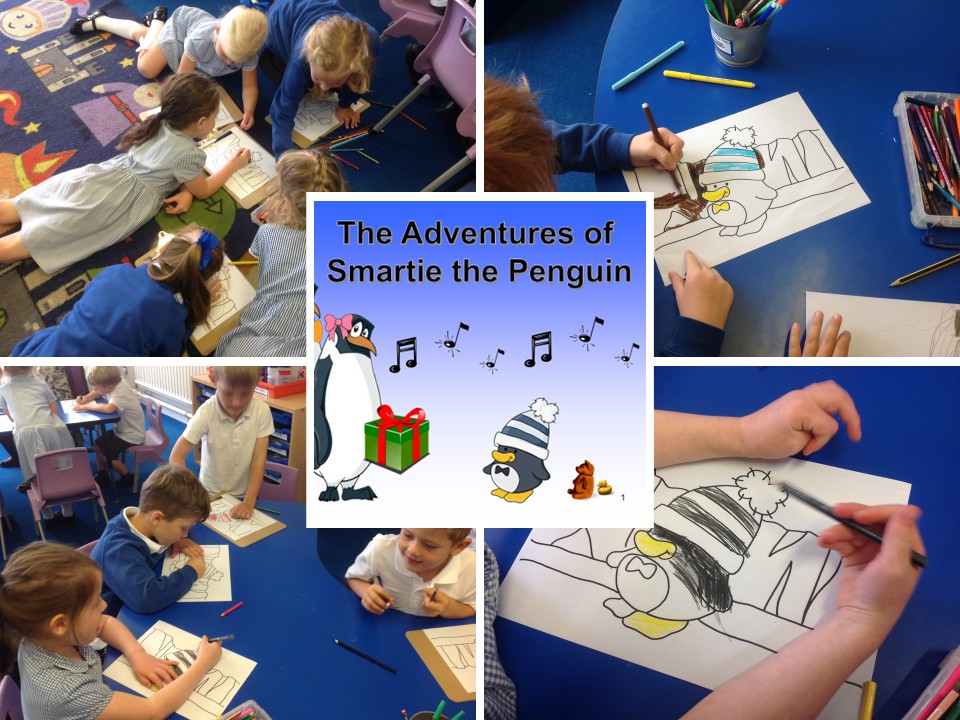
As this week was all about settling in and setting expectations for the coming year, that also included learning about how to keep ourselves safe online. The children heard the story of Smartie the Penguin and we talked about what to do if we ever see something online that makes us feel sad, scared or worried. This message was backed up by a video featuring Jessie and Friends, and enabled us to create and sign our own Year 1 E-Safety Charter, which you can find alongside the Class Charter at the bottom of this page.
Can your child tell you how they can keep themselves safe online?
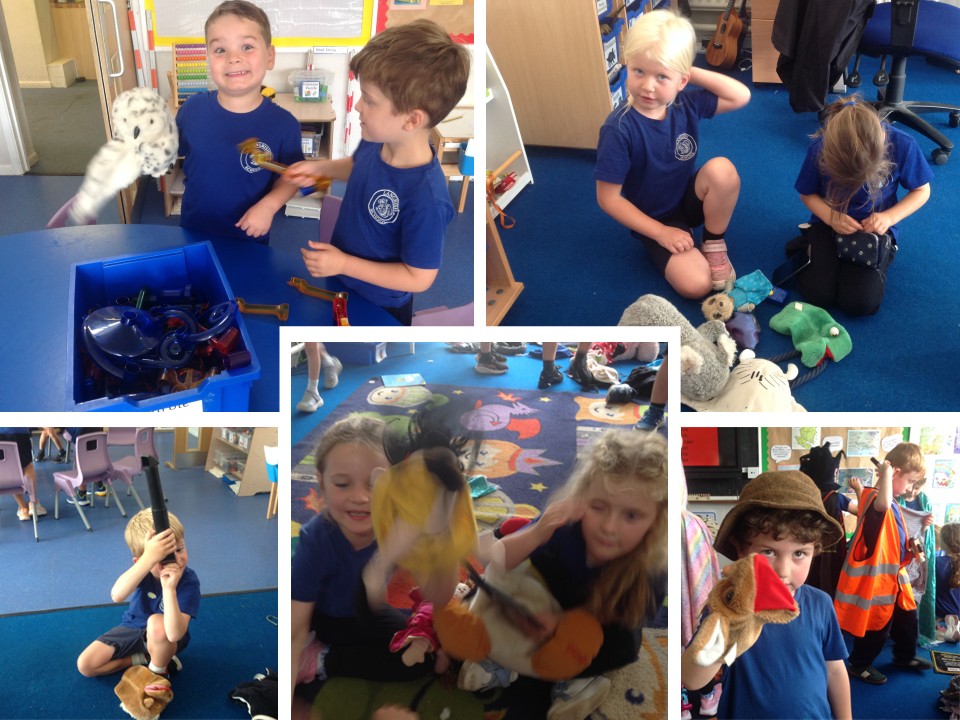 As part of the settling-in process, the children have also had plenty of time this week to get to know their new classroom.
During Explorer Time, everybody has checked out all the different areas of the classroom, from the shop and role-play area, to the creative zone and outdoor spaces.
Not only has it given the children time to get to know their new classroom, but also to get to know their two new classmates too!
Ask your child about what they've enjoyed most about their first week in their new classroom.
Phonics Word Wall
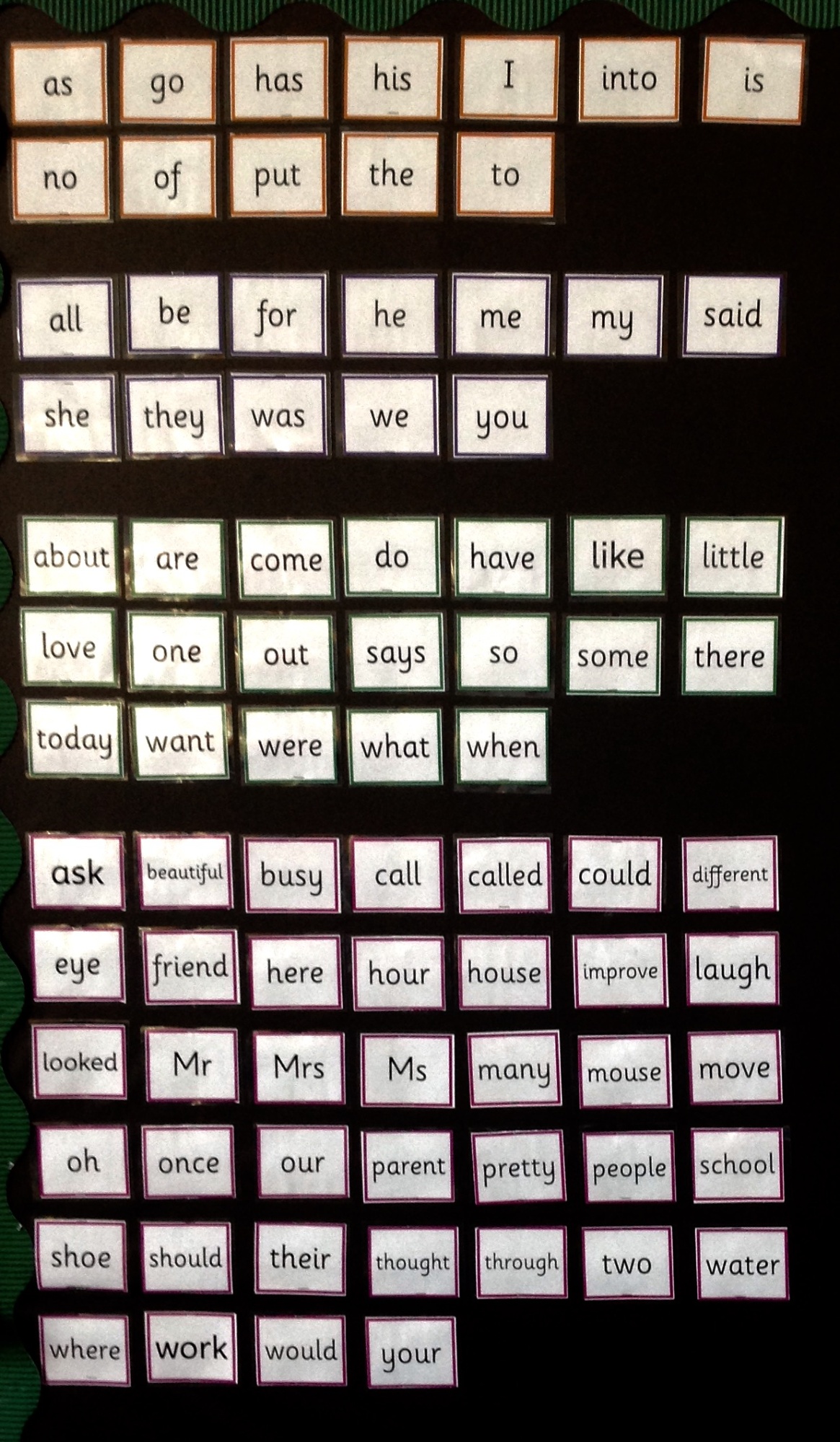
We go through all the words on our Word Wall every day as part of our Phonics lesson. The tricky words are organised and labelled to indicate which Phonics Phase and book bands the words will appear in (Pink, Red, Yellow/Blue, Green/Orange), mirroring the order in which the different Phonics sounds and phases are taught.
Age-related expectation is that children should be reading Orange books by the end of Year 1, and should therefore be able to read, recognise and understand all the words down to the bottom of the board when they appear in a text. They should also be able to start using them in their own writing, utilising the Word Wall in order to help them with their spellings.
Internet Safety and Parental Controls
There have been instances of children across a number of year groups discussing inappropriate Internet content they have viewed at home. Please ensure that your Internet-linked devices at home are suitably supervised and protected using the parental controls available. For advice on how to keep your child safe online, including the use of parental controls, click this link to the NSPCC website. If you'd like to know how to set up parental controls specific to gaming - limiting game time, in-game communication or setting spending limits for instance - click on this link to the EA Games website.
Our Learning Behaviours